1. Can the Bacteria in Your Gut Explain Your Mood?

Yet another article about the microbiome, the symbiotic bacteria living inside us. I already touched upon this topic in issue 11, I'll just quote myself (and as we know, the best of all quotes

The topic that has been brought up more and more lately is covered in this article in all its breadth. It's about a scientist who studies bacteria and other critters that inhabit the human body. There is a growing body of evidence right now that these little buggers have a profound impact on our immune system, and even our mood.
By devouring hamburgers and sweets in large quantities, which historically humans didn't encounter in nature, as well as by isolating ourselves from natural sources of microbes: soil and animals, we ruin the lives of our microbiota, and along with it, our own.
And here in this new article, a topic beloved by people in all countries is revealed: feces. Namely, that a feces transplant to another person can help them with immune diseases and their state of mind. The scientist says that the bacteria inside us have a complex effect on neurotransmitters, and thereby — on mood and thoughts. There is also a bit about the dubious benefits of "probiotics".
Buddhists and other mindful folks would do well to integrate this into their practice, although they usually eat well anyway. I can just picture it, coming to my friends and asking them to share some enlightened poop!
Jokes aside, the article is good and the topic is important, give it a read.
2. Campaign Against Science
Skepticism toward science is growing today. What is it that makes reasonable people not believe in reason?
(In Russian!)

3. "How to Manage Slaves." Advice from an Ancient Top Manager: An Ancient Roman HR Handbook

A funny allusion to the modern corporate world.
Some Western readers react nervously to this book, saying that owning slaves and managing subordinates are completely different things. In a general sense, of course, they are right. But upon deeper examination of the issue, we will find quite a lot in common between the two different situations. It is an inconvenient truth, but it doesn't stop being the truth because of that: ancient slave owners, just like today's corporations, strive to maximize the use of their human resources. No matter how much we try to mask the harsh realities of wage labor with the flowery rhetoric of mutual cooperation and friendly relationships in a "working in one team" environment, we would do well to listen to the straightforward, honest statements of the ancient Romans.
4. Ernest Hemingway: Macho man of letters
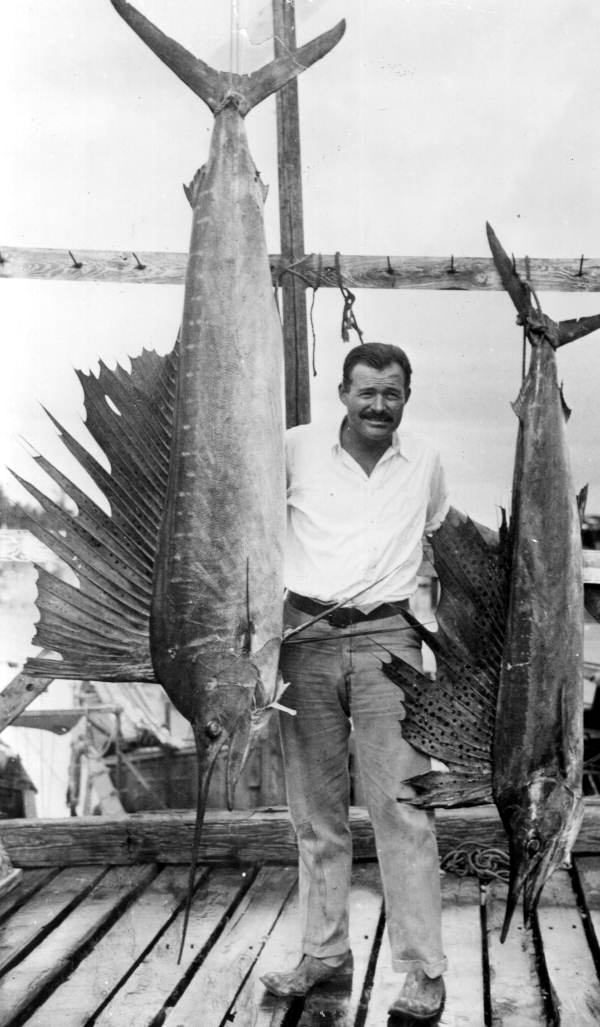
A biography of Ernest Hemingway with a ton of curious facts. I like his books, so it was an interesting read.
For example, he used to start writing at six in the morning
"Hemingway lived a very disciplined life," Nagel says. "Everything was calculated to the fact that the next morning he was going to be at his desk at 6 a.m. and he was going to work for three or four or five hours on his fiction."
After work, according to Nagel, Hemingway would have a drink before lunch, eat, then spend the rest of his afternoon fishing or engaging in an outdoor activity.
Echoes the modern trend of working moderately, but intensely.
Also, everyone seems to think Ernest was this macho guy, an adventurer and a daredevil. He was, but at the same time he was a very hardworking and meticulous word-generator, painstakingly scribbling away almost every day.
The archetypal portrait of Hemingway is a guy with a rifle, standing on top of a dead rhinoceros, or next to a marlin hanging from a scale.
His life ended heavily: due to injuries in a plane crash (according to other sources — a hereditary disease), the writer developed depression, he was treated with electroshock, which caused him to get holes in his memory and lose the ability to write.
"He would get on his knees and cry and beg his wife not to send him back for more shock treatments," Nagel says.
Unable to withstand this hell, the wonderful creator shot himself, and hardcore at that — with a shotgun.
5. Inside Mark Zuckerberg's Bold Plan For The Future Of Facebook
What does Zuckerberg want to do with Facecrook?

Curious for many users of the controversial social network.
Virtual reality, augmented reality, connecting everything with everything using the internet of things. We'll figure out how to make a profit later, first we need to enslave everyone – Mark says.
I personally would rather pay 5 dollars a month than watch ads and give away all my data to a third party, but I think there aren't that many people like that. For some reason, 5 bucks seems like overkill to a lot of people, while spending hours a month watching ads for things you don't give a damn about seems normal. Weird, but that's just how people are wired.